
What Is Static Pressure?
Static pressure is the resistance to airflow inside a duct system.
Think of it like blood pressure in the human body.
Too high = stress.
Too low = improper flow.
Most residential systems are designed for:
Maximum Total External Static Pressure (TESP): 0.50 inches of water column
Tools Required


4
To measure static pressure correctly, you need:
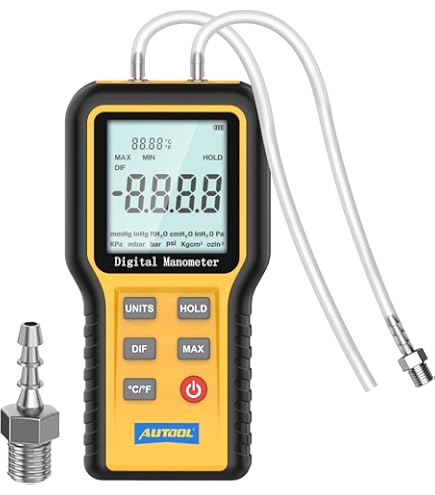
- Digital manometer (dual port preferred)
- Static pressure probes (not pitot tubes)
- 3/8” drill bit
- Manufacturer blower chart
Professional-grade tools matter. Guessing does not.
Where to Drill Test Ports


4
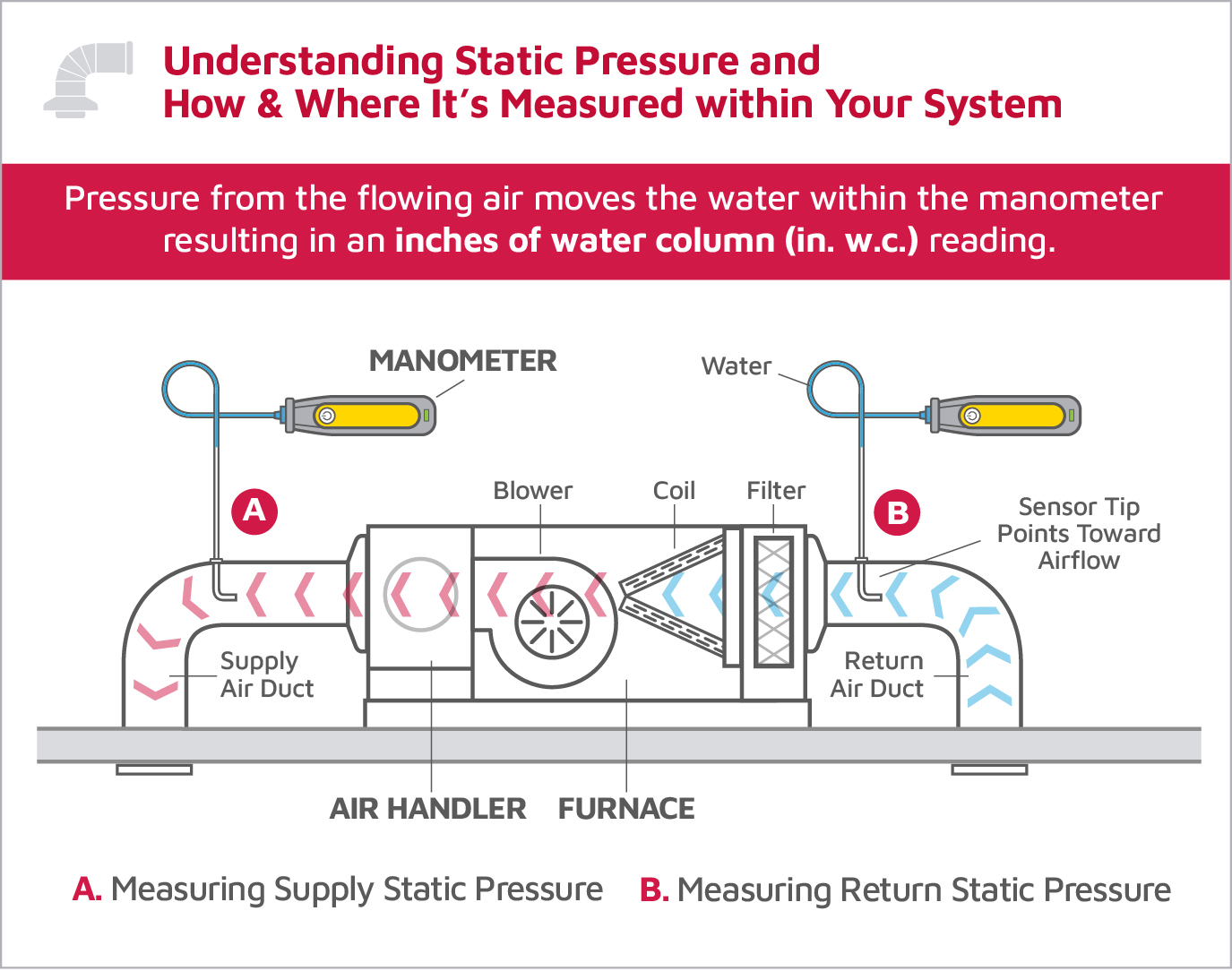
Two test ports are required.
1️⃣ Return Side (Negative Pressure)
Drill between:
- Return duct
- And the air handler cabinet
- Before the blower
2️⃣ Supply Side (Positive Pressure)
Drill between:
- Supply plenum
- And evaporator coil
- After the blower
Do NOT drill randomly into flex duct without support.
Do NOT drill inside the coil housing improperly.
Use proper static tips positioned into the airstream.
Step-by-Step Testing Procedure
Step 1: Set System to High Stage
- Cooling mode
- Fan on high
- Allow 5–10 minutes to stabilize
Testing in low stage will underreport system stress.
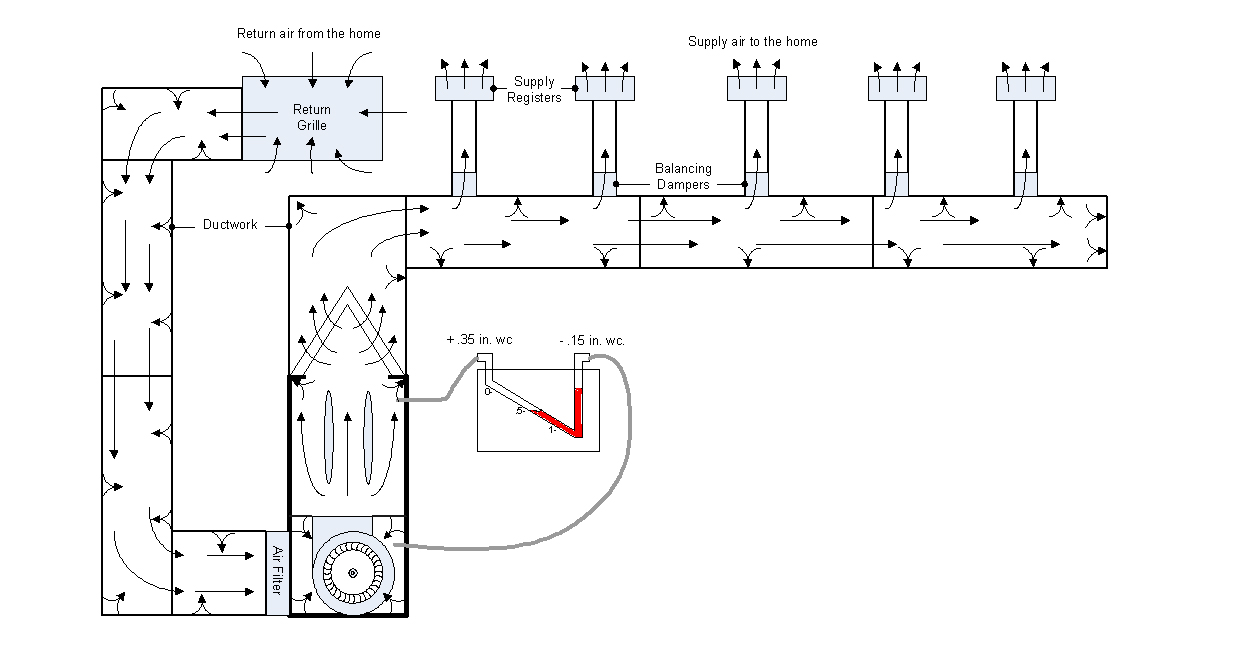
Step 2: Connect the Manometer


4
- Red hose → Supply port
- Blue hose → Return port
Return will read negative.
Supply will read positive.
Step 3: Add the Numbers
Example:
- Return: -0.42 in. w.c.
- Supply: +0.38 in. w.c.
Total External Static Pressure:
0.42 + 0.38 = 0.80 in. w.c.
What the Numbers Mean
| TESP | Interpretation |
|---|---|
| 0.30 – 0.50 | Ideal |
| 0.50 – 0.70 | Elevated |
| 0.70 – 0.90 | Restricted airflow |
| 0.90+ | Severe restriction |
Most residential systems should live below 0.50.
Consistent readings above 0.70 indicate duct system problems.
Measuring Filter & Coil Pressure Drop

4
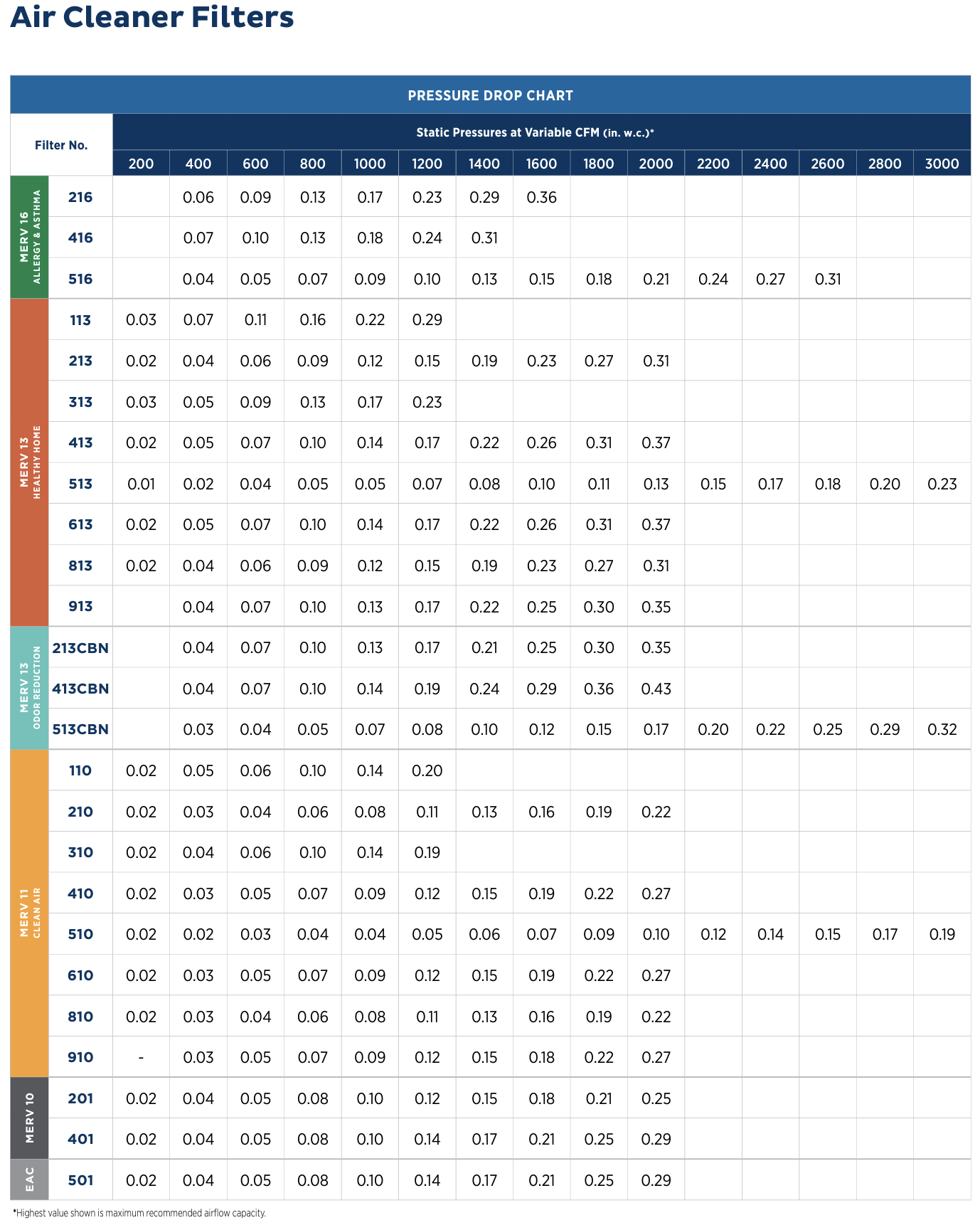
Filter Drop
Drill before and after the filter.
Ideal range:
0.10 – 0.20 in. w.c.
High readings often mean:
- Dirty filter
- Overly restrictive high-MERV filter
- Undersized return
Coil Drop
Drill before and after the evaporator coil.
Typical range:
0.20 – 0.30 in. w.c.
High readings may indicate:
- Dirty coil
- Undersized duct system
- Excessive airflow restriction
Why High Static Pressure Destroys Equipment
High static pressure causes:
- ECM motor torque increase
- Higher amp draw
- Overheating blower modules
- Increased compressor discharge temperature
- Reduced efficiency
- Premature system failure
Repeated compressor failures are often airflow failures.
Not brand failures.
When Static Pressure Should Be Tested
- New installations
- Compressor replacements
- Blower motor failures
- Comfort complaints
- High utility bills
- Noisy duct systems
- Duct reuse during equipment replacement
Static pressure testing should be standard practice — not optional.
Final Takeaway
Most HVAC systems are replaced without airflow verification.
Static pressure testing takes 10 minutes.
But it determines whether the system can breathe.
And airflow determines longevity.